
Understanding and mapping key lifecycles isn’t just a business practice—it’s a strategic imperative that separates thriving organizations from those struggling to maintain relevance in today’s dynamic marketplace.

Whether you’re managing a startup, leading a corporate team, or developing products that need to resonate with customers, lifecycle mapping provides the clarity and foresight necessary to make informed decisions. This approach transforms abstract concepts into actionable strategies, helping you anticipate challenges, capitalize on opportunities, and allocate resources with precision.
The journey toward sustainable success requires more than intuition or reactive management. It demands a systematic understanding of how things evolve, mature, and eventually transform. From customer relationships to product development, from employee engagement to technological adoption, every aspect of business follows predictable patterns that can be studied, understood, and leveraged for competitive advantage.
🔍 What Are Lifecycles and Why Should You Care?
At their core, lifecycles represent the natural progression that entities experience from inception through maturity and eventual decline or transformation. These patterns appear consistently across multiple domains—products go through development and market phases, customers move through awareness and loyalty stages, and technologies evolve from innovation to obsolescence.
The power of lifecycle thinking lies in its predictive nature. When you understand where something currently sits in its lifecycle, you can anticipate what comes next. This foresight enables proactive rather than reactive management, allowing you to prepare for transitions, mitigate risks, and maximize value at each stage.
Organizations that master lifecycle mapping gain several distinct advantages. They allocate budgets more efficiently, knowing which initiatives are in growth phases deserving investment versus those entering decline. They communicate more effectively with stakeholders by framing discussions around expected progressions rather than unexpected surprises. Most importantly, they build resilience by preparing for inevitable transitions before they become crises.
The Universal Nature of Lifecycle Patterns
What makes lifecycle mapping so powerful is its universal applicability. The same fundamental principles that govern product lifecycles also apply to customer relationships, employee careers, market trends, and technological platforms. This consistency means that once you develop lifecycle thinking skills, you can apply them across diverse business challenges.
Consider how a typical product lifecycle mirrors a customer lifecycle: both begin with awareness and interest, progress through active engagement and value delivery, reach maturity where maintenance becomes crucial, and eventually face decisions about renewal or retirement. Recognizing these parallels allows you to transfer insights between domains and develop integrated strategies that align multiple lifecycles simultaneously.
💼 The Customer Lifecycle: Your Revenue Engine
Perhaps no lifecycle matters more to business success than the customer lifecycle. This journey encompasses every interaction a customer has with your organization, from initial awareness through advocacy or departure. Understanding this lifecycle transforms how you approach marketing, sales, service, and retention strategies.
The customer lifecycle typically includes these key stages:
- Awareness: Potential customers discover your brand exists and begin forming initial impressions
- Consideration: Prospects evaluate whether your solutions address their needs and compare you with alternatives
- Purchase: The decision point where prospects convert into customers through transaction
- Onboarding: Early experiences that set expectations and establish relationship foundations
- Retention: Ongoing engagement that delivers continued value and deepens commitment
- Expansion: Opportunities to increase customer value through upsells, cross-sells, or advocacy
- Renewal or Departure: Critical junctures where relationships either continue or conclude
Mapping these stages reveals where customers experience friction, where they find exceptional value, and where they’re most vulnerable to competitor influence. This visibility enables targeted interventions that smooth transitions, accelerate progression, and maximize lifetime value.
Measuring What Matters at Each Stage
Effective customer lifecycle mapping requires stage-appropriate metrics. Awareness stages demand reach and impression metrics, while retention stages require engagement scores and satisfaction measurements. Applying the wrong metrics to a given stage creates confusion and misdirects resources toward ineffective tactics.
Organizations that excel at customer lifecycle management develop dashboards that track progression rates between stages, identify bottlenecks where customers stall, and highlight opportunities where small improvements yield disproportionate returns. This data-driven approach removes guesswork and enables continuous optimization based on actual customer behavior rather than assumptions.
🚀 Product Lifecycle Management: From Innovation to Legacy
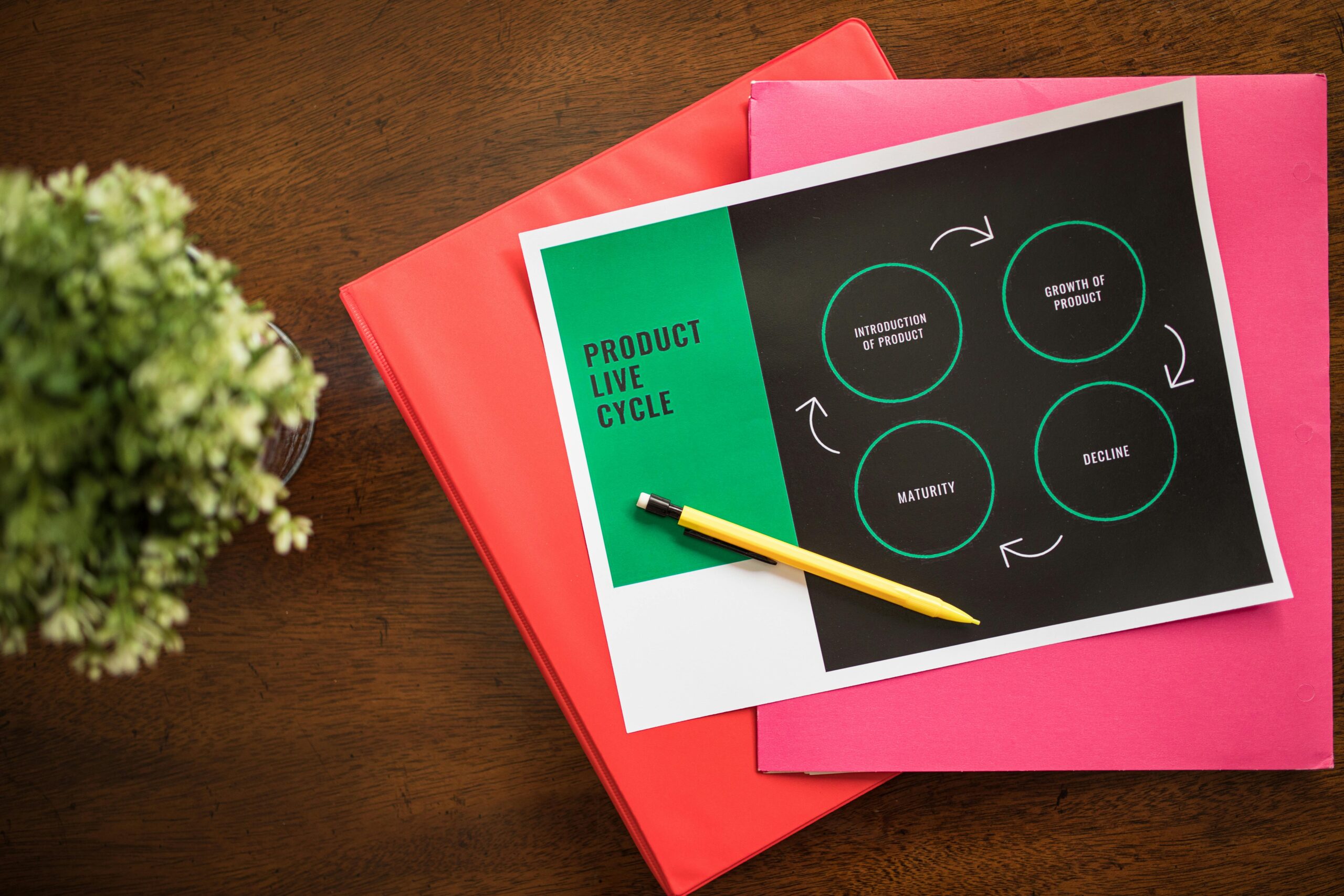
Products follow predictable trajectories from conception through market withdrawal, and understanding these patterns is essential for portfolio management, resource allocation, and strategic planning. The traditional product lifecycle framework identifies four primary phases: introduction, growth, maturity, and decline.
During the introduction phase, products require significant investment in development, marketing, and customer education. Sales volumes remain modest while the organization establishes market presence and refines the offering based on early adopter feedback. Success metrics focus on market penetration rates and product-market fit indicators rather than profitability.
The growth phase represents the sweet spot where demand accelerates, revenues climb steeply, and competitors take notice. Strategic priorities shift toward scaling operations, defending market position, and maximizing market share before saturation occurs. This stage demands different capabilities than introduction, emphasizing operational efficiency and distribution expansion.
Maturity brings market saturation, intensified competition, and margin pressure. Products in this phase generate stable revenues but offer limited growth potential. Management focus shifts toward cost optimization, differentiation through service or features, and harvesting profits while planning for eventual replacement or reinvention.
Extending Product Lifecycles Through Strategic Innovation
Decline doesn’t have to be inevitable or permanent. Organizations can extend product lifecycles through strategic interventions: finding new markets, adding complementary features, repositioning for different use cases, or integrating with other offerings. The key is recognizing when a product enters maturity early enough to implement lifecycle extension strategies before momentum is lost.
Some of the most successful companies maintain portfolios balanced across lifecycle stages—new products in introduction, growth drivers in expansion, cash cows in maturity, and legacy products being gracefully retired. This balance ensures consistent revenue while maintaining innovation pipelines that fuel future growth.
👥 Employee Lifecycle: Building Sustainable Talent Strategies
The relationship between organizations and employees follows its own lifecycle, from initial attraction through productivity peaks and eventual transition. Understanding this employee lifecycle enables more effective talent management, reduces turnover costs, and creates workplace cultures that maximize engagement and performance.
The employee lifecycle begins before hiring, during the attraction phase where employer brand and recruitment marketing shape candidate perceptions. This progresses through recruitment and selection, onboarding and integration, development and performance, and eventually separation through resignation, retirement, or termination.
Each stage presents distinct challenges and opportunities. Attraction stages require compelling employer value propositions and efficient candidate sourcing. Onboarding demands structured integration programs that accelerate productivity and cultural alignment. Development stages need clear career pathways and skill-building opportunities. Retention depends on recognition, meaningful work, and competitive compensation.
The Hidden Cost of Lifecycle Neglect
Organizations that fail to map employee lifecycles systematically experience predictable problems: new hires who never fully integrate, mid-career employees who plateau and disengage, high performers who leave for opportunities elsewhere, and institutional knowledge that walks out the door with departing veterans. These failures impose enormous costs in recruitment, training, lost productivity, and diminished organizational capability.
By contrast, companies that thoughtfully design interventions for each lifecycle stage create competitive advantages in talent markets. They attract stronger candidates, integrate them faster, develop them more effectively, and retain them longer. This superiority compounds over time, creating talent density that becomes difficult for competitors to match.
🔄 Technology Adoption Lifecycle: Timing Innovation Investment
Technology investments represent major resource commitments, and understanding the technology adoption lifecycle helps organizations time these investments optimally. The classic adoption curve divides markets into innovators, early adopters, early majority, late majority, and laggards—each segment with distinct characteristics and motivations.
Innovators embrace new technologies for their novelty and potential, accepting bugs and incompleteness as the price of being first. Early adopters seek competitive advantages and are willing to invest in technologies that promise significant benefits despite implementation challenges. The early majority requires proof of value and prefer established, reliable solutions. The late majority adopts only when technology becomes standard practice. Laggards resist adoption until alternatives disappear.
Understanding where a technology sits on this adoption curve influences investment decisions profoundly. Adopting too early means bearing high costs, limited vendor support, and integration difficulties. Adopting too late means surrendering competitive advantages to faster-moving rivals. The optimal timing depends on your organization’s risk tolerance, resource availability, and strategic positioning.
Navigating the Chasm Between Early Adoption and Mainstream
Geoffrey Moore’s famous “chasm” concept identifies a critical gap between early adopters and the early majority—a transition point where many promising technologies fail. This chasm exists because the criteria these groups use to evaluate technologies differ fundamentally. Early adopters tolerate imperfection for potential advantage; the early majority demands complete solutions that integrate seamlessly with existing systems.
For organizations deploying technology, recognizing this chasm helps set realistic expectations about implementation timelines and resource requirements. For companies developing technology products, understanding this transition is essential for product roadmaps, marketing strategies, and partnership decisions that bridge the gap successfully.
📊 Practical Steps for Mapping Your Critical Lifecycles
Understanding lifecycle concepts intellectually is valuable, but practical implementation requires systematic approaches tailored to your organization’s context. Begin by identifying which lifecycles matter most to your strategic objectives—customer relationships, key products, talent pipelines, or technology platforms.
For each priority lifecycle, document the distinct stages using language that resonates with your organization. Avoid generic terminology in favor of descriptions that reflect your specific business model and customer reality. A B2B enterprise software company’s customer lifecycle looks dramatically different from a consumer retail brand’s, and your mapping should reflect these differences.
Next, identify the characteristics that define each stage. What behaviors, metrics, or conditions indicate that a customer, product, or employee has transitioned from one stage to another? Clear definitions enable consistent classification and meaningful measurement across your organization.
Building Your Lifecycle Mapping Framework
Create visual representations of your key lifecycles that stakeholders can easily understand and reference. These might take the form of journey maps, funnel diagrams, timeline illustrations, or stage matrices—whatever format communicates most effectively with your audience. The goal is creating shared understanding that enables coordinated action.
Assign ownership for each lifecycle stage to specific teams or roles. Someone should be accountable for optimizing transitions, measuring performance, and continuously improving outcomes at each phase. Without clear ownership, lifecycle mapping remains an interesting exercise rather than a management discipline.
Establish regular review rhythms where teams examine lifecycle performance, identify emerging patterns, and adjust strategies accordingly. These reviews should focus on progression rates between stages, bottlenecks that slow advancement, and opportunities where interventions might accelerate desired outcomes.
🎯 Aligning Strategy Across Multiple Lifecycles
The most sophisticated organizations don’t just map individual lifecycles—they align strategies across multiple lifecycles simultaneously. This integrated approach recognizes that customer lifecycles, product lifecycles, and employee lifecycles interact in complex ways that create leverage points for exceptional performance.
Consider how product lifecycle stages influence appropriate customer lifecycle strategies. Products in introduction phases require customers who tolerate imperfection and provide valuable feedback—characteristics typical of innovators and early adopters. Mature products serve mainstream customers who prioritize reliability and comprehensive features. Misaligning customer targeting with product lifecycle stage undermines both efforts.
Similarly, employee lifecycle alignment matters for execution effectiveness. Launching new products requires different talent profiles than optimizing mature offerings. Growth stages demand people comfortable with ambiguity and rapid change. Mature stages need operators who excel at refinement and efficiency. Lifecycle-aware talent strategies ensure you have the right people in the right roles at the right time.
⚡ Transforming Lifecycle Insights Into Competitive Advantage
Knowledge becomes power only when converted into action. Organizations that translate lifecycle insights into operational excellence create sustainable competitive advantages that compound over time. This translation requires embedding lifecycle thinking into planning processes, resource allocation decisions, and performance management systems.
Budget planning should reflect lifecycle realities—introduction-stage initiatives need different resource profiles than maturity-stage operations. Marketing strategies should adapt to customer lifecycle stages—awareness tactics differ fundamentally from retention approaches. Product roadmaps should balance portfolio lifecycle distribution to ensure current revenue stability and future growth potential.
Performance expectations must acknowledge lifecycle contexts. Expecting mature-phase margins from introduction-phase products creates frustration and misguided decisions. Similarly, applying growth-phase expansion metrics to saturated markets sets teams up for failure. Lifecycle-informed goal-setting creates accountability while maintaining realism about what’s achievable at each stage.
🌟 The Continuous Evolution of Lifecycle Mastery
Lifecycle mapping isn’t a one-time project but an ongoing discipline that evolves as your organization grows and markets shift. The specific stages, transition criteria, and optimal strategies that work today may need adjustment as business models evolve, technologies emerge, and customer expectations change.
Build feedback loops that capture lessons from lifecycle transitions—what worked when moving customers from consideration to purchase, which product features accelerated growth phase momentum, how employee onboarding practices improved retention. These insights become organizational knowledge that improves decision-making quality over time.
Encourage lifecycle thinking throughout your organization, not just within specialized teams. When everyone from frontline employees to senior leaders thinks in lifecycle terms, conversations become more strategic, decisions more informed, and actions better coordinated. This cultural shift represents perhaps the most valuable outcome of lifecycle mapping—a shared mental model that aligns efforts toward common objectives.
Success in today’s complex business environment requires more than hard work or good intentions. It demands strategic clarity about where you are, where you’re going, and what comes next. Lifecycle mapping provides exactly this clarity, transforming uncertainty into understanding and reactive scrambling into proactive management. Organizations that master this discipline don’t just respond to change—they anticipate it, prepare for it, and leverage it for competitive advantage. The question isn’t whether to map your critical lifecycles, but how quickly you can start and how thoroughly you’ll commit to this transformative practice. 🚀