
The convergence of classical and post-quantum cryptography represents a pivotal moment in securing our digital future against emerging quantum threats.

🔐 The Quantum Threat Reality Check
We stand at a critical juncture in cybersecurity history. Quantum computers, once confined to theoretical discussions, are rapidly becoming reality. These powerful machines threaten to unravel the cryptographic foundations that protect our digital infrastructure, from banking transactions to government communications. The encryption methods we’ve relied upon for decades—RSA, ECC, and Diffie-Hellman—face obsolescence in a post-quantum world.
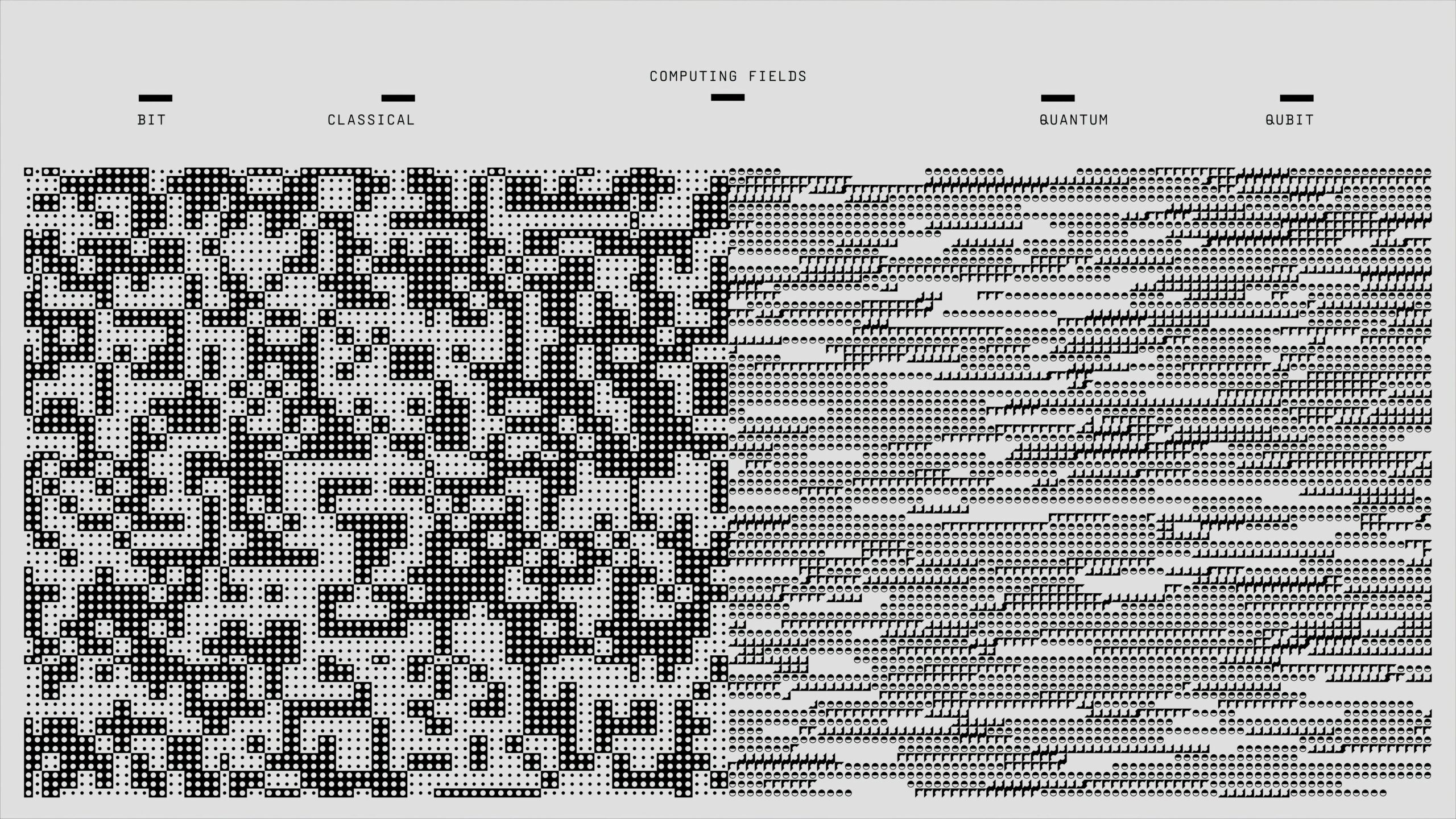
However, the transition to quantum-resistant cryptography isn’t as simple as flipping a switch. Organizations worldwide are grappling with a fundamental challenge: how do we protect against quantum threats while maintaining compatibility with existing systems? The answer lies in hybrid cryptographic schemes that merge classical and post-quantum algorithms into a unified security framework.
Understanding the Hybrid Cryptography Paradigm
Hybrid cryptographic schemes represent an elegant solution to an unprecedented challenge. Rather than forcing organizations to choose between classical reliability and quantum resistance, hybrid approaches combine both methodologies. This fusion creates a security model where data remains protected even if one algorithm fails or becomes compromised.
The fundamental principle is straightforward yet powerful: hybrid schemes layer multiple cryptographic algorithms so that an attacker must break all components simultaneously to compromise the system. If classical algorithms fall to quantum attacks, the post-quantum layer provides protection. Conversely, if undiscovered vulnerabilities emerge in new post-quantum standards, classical algorithms maintain security.
The Architecture of Hybrid Security
At its core, a hybrid cryptographic system operates through parallel or sequential combination of algorithms. In parallel hybrid schemes, both classical and post-quantum algorithms process the same data independently, with outputs combined through secure mechanisms. Sequential approaches apply one algorithm after another, creating layered protection.
Consider a hybrid key encapsulation mechanism (KEM): a client generates keys using both RSA and a lattice-based post-quantum algorithm like CRYSTALS-Kyber. The resulting shared secret combines both outputs, ensuring that compromise of either individual algorithm doesn’t expose the final key. This redundancy provides defense-in-depth against current and future threats.
🚀 Performance Implications and Trade-offs
Implementing hybrid cryptography introduces inevitable performance considerations. Post-quantum algorithms typically require larger key sizes and longer processing times compared to their classical counterparts. When combined in hybrid schemes, these computational costs compound, potentially impacting system performance.
Key size represents one of the most significant challenges. Classical RSA-2048 keys occupy 256 bytes, while CRYSTALS-Kyber-768 public keys require 1,184 bytes. A hybrid implementation combining both exceeds 1,400 bytes—more than five times the classical size. This expansion affects bandwidth consumption, storage requirements, and transmission latency, particularly in resource-constrained environments.
Optimization Strategies for Real-World Deployment
Despite these challenges, numerous optimization strategies make hybrid cryptography practical for production environments. Algorithm selection plays a crucial role: choosing efficient post-quantum candidates like CRYSTALS-Kyber over alternatives with larger footprints minimizes overhead. Implementation optimizations, including hardware acceleration and algorithm-specific enhancements, significantly improve performance.
Network protocol designers have developed clever techniques to mitigate bandwidth concerns. Key compression, session resumption, and strategic caching reduce the impact of larger cryptographic materials. For TLS implementations, hybrid key exchange adds typically 1-2 milliseconds of latency—imperceptible to users but providing substantial quantum resistance.
Evaluating Post-Quantum Algorithm Candidates
The National Institute of Standards and Technology (NIST) post-quantum cryptography standardization process has identified several promising algorithm families for hybrid deployment. Each offers distinct characteristics suited to different applications and security requirements.
Lattice-Based Cryptography: The Leading Contender
Lattice-based algorithms, including CRYSTALS-Kyber for key encapsulation and CRYSTALS-Dilithium for digital signatures, have emerged as frontrunners. These schemes base their security on the hardness of mathematical problems involving high-dimensional lattices—challenges believed resistant to both classical and quantum attacks.
The advantages are compelling: relatively compact key sizes (compared to other post-quantum options), fast operations, and strong security proofs. CRYSTALS-Kyber demonstrates performance comparable to classical Diffie-Hellman key exchange, making it ideal for hybrid TLS implementations. Major technology companies, including Google and Cloudflare, have successfully deployed Kyber in hybrid configurations.
Code-Based and Hash-Based Alternatives
Code-based cryptography, exemplified by Classic McEliece, offers the longest-established post-quantum security foundation, with decades of cryptanalytic scrutiny providing confidence. However, extremely large public keys (over 1 megabyte) limit applicability to scenarios where key transmission isn’t bandwidth-constrained.
Hash-based signatures like SPHINCS+ provide conservative security assumptions based on well-understood hash functions. Their stateless nature simplifies implementation compared to stateful alternatives, though signature sizes remain substantial. In hybrid schemes, hash-based signatures offer an excellent hedge against potential weaknesses in algebraic post-quantum constructions.
🔬 Security Analysis: When Two Become Stronger Than One
The security proposition of hybrid cryptography rests on a fundamental guarantee: the combined scheme provides security at least as strong as the strongest component. Formally, if either the classical or post-quantum algorithm remains secure, the hybrid construction maintains confidentiality and authenticity.
This property, known as crypto-agility through diversity, protects against several threat scenarios. Unexpected quantum computing advances might break classical algorithms sooner than anticipated. Conversely, mathematical breakthroughs or implementation flaws could compromise post-quantum schemes still undergoing real-world hardening. Hybrid approaches provide insurance against both possibilities.
Cryptographic Binding and Combination Methods
The method of combining classical and post-quantum outputs critically affects security. Naive concatenation might introduce vulnerabilities if one component is compromised. Proper hybrid constructions employ cryptographic binding through key derivation functions (KDFs) that thoroughly mix both contributions.
For key encapsulation, the recommended approach involves using both the classical and post-quantum shared secrets as inputs to a robust KDF like HKDF-SHA256. This ensures that an attacker learning one shared secret gains no advantage in determining the final key. Similar principles apply to hybrid signature schemes, where signatures from both algorithms are combined and verified together.
Implementation Challenges and Best Practices ⚙️
Deploying hybrid cryptography in production environments requires careful consideration of numerous practical factors. Legacy system compatibility tops the list—hybrid schemes must interoperate with existing infrastructure while providing a migration path to full post-quantum security.
Protocol designers face the challenge of negotiating hybrid algorithms between parties that may support different capabilities. TLS 1.3 extensions for hybrid key exchange must gracefully fall back to classical algorithms when communicating with non-hybrid endpoints. This backward compatibility requirement adds complexity but remains essential for gradual ecosystem transition.
Side-Channel Resistance and Constant-Time Implementation
Post-quantum algorithms introduce new side-channel attack surfaces that implementers must address. Lattice-based schemes require careful constant-time implementation to prevent timing attacks that could leak secret information. Unlike classical algorithms with decades of hardened implementations, post-quantum code requires rigorous security auditing and testing.
Hybrid implementations multiply these concerns—both classical and post-quantum components need protection against side-channel attacks. Memory safety, timing consistency, and resistance to fault injection attacks must extend across the entire hybrid construction. Organizations deploying hybrid cryptography should leverage vetted libraries like liboqs (Open Quantum Safe) that provide hardened implementations.
Real-World Deployment Success Stories 🌐
Forward-thinking organizations have already begun deploying hybrid cryptography in production systems. Google’s CECPQ2 experiment combined X25519 classical key exchange with NTRU-HRSS, a lattice-based post-quantum algorithm, protecting Chrome browser connections. This large-scale deployment demonstrated hybrid cryptography’s viability while providing valuable performance data.
Cloudflare launched similar experiments with multiple post-quantum algorithms in hybrid configurations, protecting millions of HTTPS connections daily. These real-world deployments revealed that hybrid key exchange adds minimal latency—typically under 2 milliseconds—while significantly increasing quantum resistance. The experiments also identified practical challenges like Certificate Transparency log capacity limits for larger certificates.
Financial Sector Leadership
Banks and financial institutions, stewards of highly sensitive data with decades-long confidentiality requirements, are pioneering hybrid cryptography adoption. Several major banks have implemented hybrid TLS for internal communications and are exploring post-quantum protection for stored data. The financial sector’s motivation is clear: transactions encrypted today with only classical algorithms remain vulnerable to “harvest now, decrypt later” attacks.
Payment networks are developing hybrid cryptographic standards for card transactions and digital wallets. These initiatives recognize that payment data often remains valuable long after transactions occur, requiring protection against future quantum threats. Industry consortia are collaborating to ensure interoperability as hybrid schemes become standard.
🎯 Strategic Considerations for Organizations
Organizations planning quantum-safe transitions must develop comprehensive strategies that extend beyond merely selecting algorithms. Data classification helps prioritize which systems require immediate hybrid protection versus those that can wait for standardization to mature further.
High-value, long-lived data—intellectual property, personal information, state secrets—demands immediate hybrid protection. Public websites with ephemeral session data present lower priority. This risk-based approach allocates resources efficiently while building organizational experience with post-quantum cryptography.
Vendor Ecosystem and Supply Chain Security
The cryptographic supply chain introduces dependencies that organizations must carefully evaluate. Hardware security modules (HSMs), cryptographic libraries, and protocol implementations all require post-quantum and hybrid support. Vendor roadmaps should be scrutinized to ensure timely availability of quantum-resistant capabilities.
Standards compliance provides a foundation for interoperability but shouldn’t be the sole criterion. Organizations should evaluate vendor implementations for security audits, side-channel resistance, and performance characteristics. Open-source implementations offer transparency benefits but may require additional internal expertise to deploy and maintain securely.
The Path Forward: Standards and Evolution
NIST’s post-quantum cryptography standardization process represents a watershed moment, but it’s only the beginning. The first standards, including CRYSTALS-Kyber and CRYSTALS-Dilithium, were published in 2024, initiating a multi-year ecosystem transition. Hybrid schemes provide the bridge during this critical period.
Future cryptographic agility will be essential as the quantum threat evolves. Systems designed today should support algorithm negotiation and graceful upgrades without requiring wholesale infrastructure replacement. Hybrid approaches naturally provide this flexibility—organizations can adjust the classical and post-quantum components as threat landscapes and cryptographic confidence change.
Quantum Computing Timeline Uncertainty
Significant uncertainty surrounds when cryptographically-relevant quantum computers will emerge. Conservative estimates suggest 10-15 years, while optimistic projections place it further in the future. However, “harvest now, decrypt later” attacks mean adversaries are already collecting encrypted data for future decryption.
This timeline uncertainty makes hybrid cryptography particularly valuable. Organizations need not guess when quantum computers will arrive—hybrid schemes provide protection regardless. As quantum computing capabilities become clearer, organizations can adjust their cryptographic strategies while maintaining continuous protection.
🔮 Beyond Key Exchange: Expanding Hybrid Applications
While hybrid key encapsulation and signatures receive the most attention, other cryptographic applications benefit from hybrid approaches. Secure messaging protocols, document signing workflows, and blockchain systems can all leverage hybrid cryptography to future-proof their security foundations.
Code signing represents a particularly compelling use case. Software signed today with classical algorithms might be verified and trusted for decades. Hybrid signatures combining RSA or ECDSA with CRYSTALS-Dilithium ensure that signed code remains trustworthy even after quantum computers emerge, without requiring re-signing existing software archives.
Measuring Success: Metrics for Hybrid Deployment
Organizations deploying hybrid cryptography should establish clear metrics to evaluate success. Performance benchmarks including latency, throughput, and resource consumption provide quantitative measures. Security metrics track algorithm diversity, crypto-agility readiness, and coverage of high-value assets.
Operational metrics matter equally: incident response preparedness for cryptographic vulnerabilities, time-to-upgrade when new threats emerge, and vendor ecosystem readiness. Regular exercises testing the ability to rotate algorithms or respond to cryptographic breaks ensure organizations can act decisively when needed.
🛡️ Fortifying Our Digital Future
Hybrid cryptographic schemes represent more than a temporary bridge to a post-quantum world—they embody a philosophy of defense-in-depth and crypto-agility that will remain valuable indefinitely. The fusion of classical and post-quantum cryptography provides robust protection against both known and unknown threats while maintaining compatibility with existing systems.
The journey to quantum-safe security has begun, and hybrid approaches light the path forward. Organizations that embrace hybrid cryptography today position themselves to weather the quantum storm while maintaining operational continuity. The question is no longer whether to adopt hybrid cryptography, but how quickly you can implement it across your critical systems.
As quantum computing advances from laboratory curiosity to practical reality, the cryptographic landscape will undergo its most significant transformation since public-key cryptography emerged in the 1970s. Hybrid schemes ensure that this transformation strengthens rather than disrupts our digital security infrastructure. The power of hybrid cryptography lies not just in protecting against quantum threats, but in providing the flexibility and resilience our interconnected world demands.